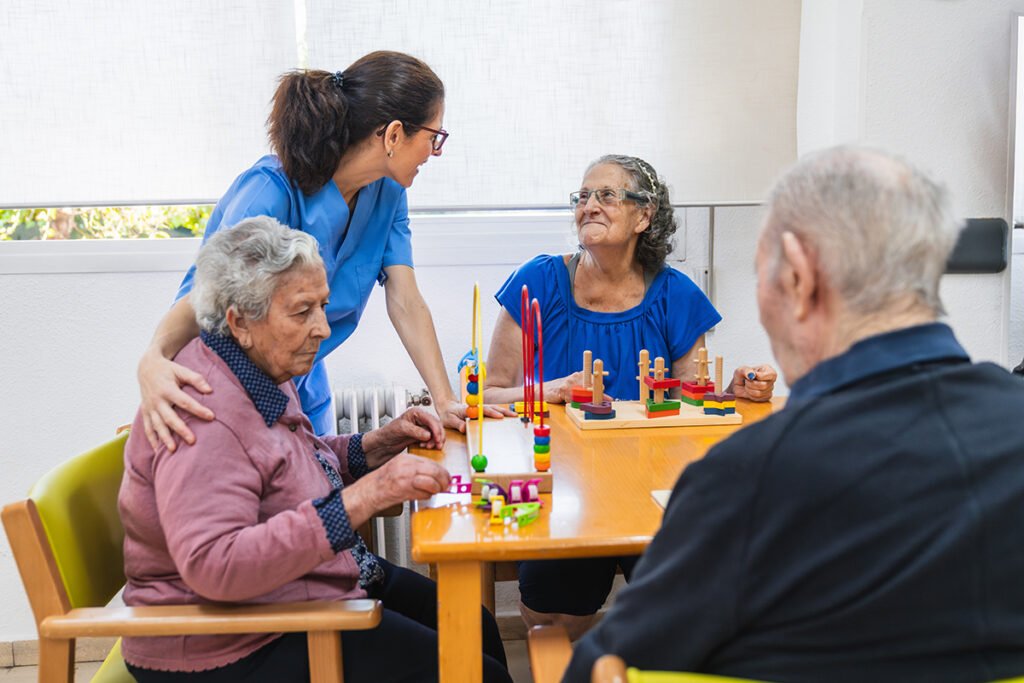
Dementia changes many things.
It can change memory, speech, behaviour and the way a person understands the world around them. It also changes life for the people who love and care for them.
But dementia does not take away the person.
A parent, partner or loved one living with dementia still needs kindness, comfort, routine, laughter, familiar voices and gentle support. They still need to feel respected. They still need to feel safe.
This guide is written for families who may be caring for someone with dementia, or beginning to think about the care they may need.
What Is Dementia?
Dementia is not one single disease. It is a term used to describe a group of symptoms that affect memory, thinking, communication and daily life.
The most common types include Alzheimer’s disease, vascular dementia, Lewy body dementia and frontotemporal dementia.
Dementia is more common in later life, but it is not a normal part of ageing. If someone is becoming forgetful, confused, withdrawn or finding everyday tasks harder, it is important to speak to a GP.
Some symptoms that look like dementia can be caused by other conditions, including infections, vitamin deficiencies, thyroid problems, depression or medication side effects. These may be treatable, so getting proper advice matters.
Common Signs Families May Notice
Every person experiences dementia differently. For some, changes are gentle at first. For others, they become more noticeable quite quickly.
Families may notice:
- Forgetting recent conversations or appointments
- Repeating the same questions
- Getting lost in familiar places
- Finding it harder to follow conversations
- Struggling with words or names
- Becoming anxious, confused or unsettled
- Changes in mood or personality
- Difficulty managing meals, medication or personal care
- Trouble making decisions or following simple steps
These changes can be upsetting for families. They can also be frightening for the person experiencing them.
Patience, reassurance and calm support can make a real difference.
Communication Matters
As dementia progresses, communication can become harder.
The way we speak becomes very important.
Try to use short, clear sentences. Speak slowly. Keep your tone gentle. Give the person time to respond.
If they struggle to find a word, try not to rush them. If they become confused about something, avoid arguing or correcting too firmly. This can cause distress.
Sometimes it helps to join the feeling, rather than correct the detail.
For example, if someone asks for a loved one who has passed away, the most helpful response may not be a direct correction. A softer answer such as, “You’re thinking about them today,” or “Tell me about them,” can bring comfort without causing shock or sadness.
Kind communication helps preserve dignity.
Routine Can Bring Comfort
For many people living with dementia, routine is reassuring.
Knowing what usually happens next can reduce anxiety. Regular mealtimes, familiar faces, quiet surroundings and simple choices can help the day feel more manageable.
Small things can help:
- Keeping the home calm and uncluttered
- Using clear signs or labels where helpful
- Offering one choice at a time
- Breaking tasks into small steps
- Keeping meals and rest times steady
- Encouraging independence for as long as possible
- Using familiar music, photos or personal items
A favourite chair, a familiar cup, a much-loved song or a gentle walk can carry deep comfort.
These little things matter.
Food, Drink and Daily Wellbeing
Eating and drinking can become more difficult for someone living with dementia.
They may forget to drink. They may lose interest in food. They may struggle with cutlery or become unsure at mealtimes.
Simple support can help.
Offer drinks regularly. Serve smaller portions if large meals feel overwhelming. Choose familiar foods. Make mealtimes calm and unhurried. Finger foods can also help when using cutlery becomes difficult.
Food is not only about nutrition. It is also about comfort, memory and pleasure.
A proper meal, served with patience, can bring a sense of normality to the day.
Understanding Changes in Behaviour
Sometimes a person with dementia may become upset, suspicious, restless or agitated.
This behaviour is often communication.
They may be tired, hungry, thirsty, in pain, overwhelmed by noise, needing the toilet, or simply frightened because the world feels unfamiliar.
Instead of asking, “Why are they behaving like this?” it can help to ask, “What might they be trying to tell us?”
A calm voice, a quieter space, a cup of tea, familiar music, or gentle reassurance can often help.
The person is not trying to be difficult. They are trying to cope with changes they may not understand.
Families Need Support Too
Caring for someone with dementia can be deeply emotional.
It can also be tiring.
Many family carers try to manage everything themselves. They may feel guilty for needing help. But accepting support is not a failure. It is part of caring well.
Family carers need rest, guidance and time to look after their own health too.
Support may come from relatives, friends, local dementia groups, respite care, day care services, GPs, memory clinics or organisations such as Alzheimer’s Society and Dementia UK.
No family should feel they have to manage alone.
When More Support May Be Needed
There may come a time when care at home becomes difficult to manage safely.
This can happen when a loved one needs support during the day and night, begins wandering, forgets medication, has falls, becomes very anxious, or needs help with personal care, meals and mobility.
Thinking about a care home can feel emotional. Families may worry about whether it is the right decision.
But the right care setting can bring reassurance. It can offer safety, companionship, good food, activities, routine and support from people trained to care with patience and respect.
It can also allow families to return to being sons, daughters, partners and relatives, not only carers.
Dementia Care at Senera Care
At Senera Care, we understand that dementia care needs kindness, patience and familiarity.
Residents are supported by trained staff who take time to know the person behind the condition. Their routines, food preferences, comforts, memories and family connections all help shape the way care is given.
Our homes provide calm surroundings, good food, gentle activities and support that protects each resident’s dignity.
We believe residents living with dementia should feel included, valued and treated with respect in every part of the day.
Families are also kept involved. Their knowledge, memories and understanding of their loved one are an important part of good dementia care.
A Final Thought
Dementia takes many things.
But it does not take away the need for love, touch, laughter and connection.
Even when words become difficult, a smile can still be understood. A familiar song can still bring comfort. A hand held gently can still say, “You are not alone.”
For families, dementia can be a hard road. But with patience, support and the right care, it can still be walked with dignity.
If you are considering dementia care for someone you love, our team at Senera Care is here to listen, guide and help you understand the next step.